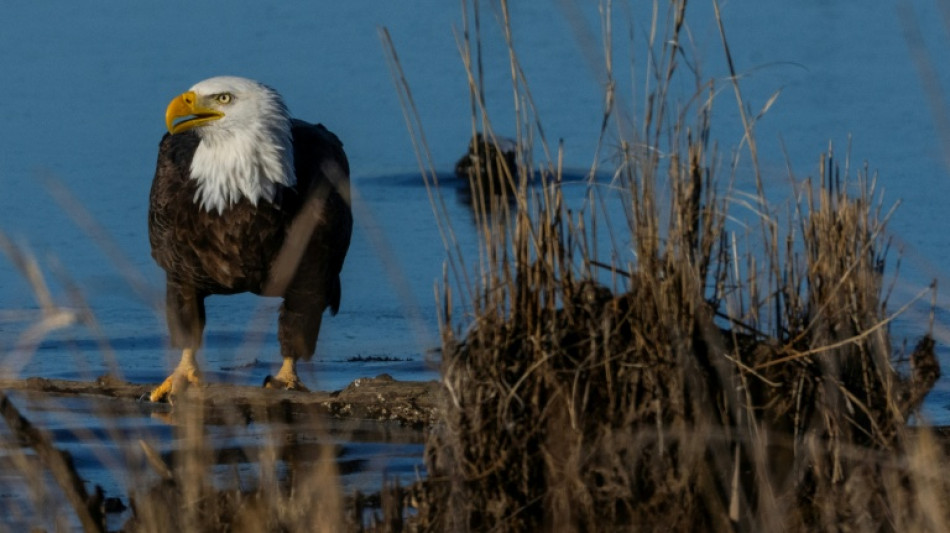
Trump administration weakens habitat protections for endangered species / Photo: Jim WATSON - AFP/File
President Donald Trump's administration on Friday finalized a rule narrowing the definition of "harm" under the Endangered Species Act, in a move conservationists warned could open the door to widespread habitat destruction.
The Department of the Interior and the Department of Commerce framed the change as returning the law to its original intent, ending what they called years of overreach.
"For years, federal agencies abused the ESA to obstruct lawful land use and burden American families and businesses," said Interior Secretary Doug Burgum in a statement.
"That approach turned routine activity into a regulatory trap, drove up costs that impacted people's lives, and expanded federal authority beyond what Congress intended. This action restores common sense, respects private property, provides much-needed certainty for landowners and follows the statute Congress actually passed."
The landmark Endangered Species Act -- passed in 1973 and credited with saving the bald eagle, American alligator and other iconic species -- prohibits the "take" of endangered species, and defines "take" to mean "harass, harm, pursue, hunt, shoot, wound, kill, trap, capture, or collect, or to attempt to engage in any such conduct."
In implementing the law, the government further defined "harm" to include "significant habitat modification or degradation where it actually kills or injures wildlife by significantly impairing essential behavioral patterns, including breeding, feeding or sheltering."
That definition stood for decades, notably surviving a 1995 Supreme Court case that focused on the protection of old-growth forests for spotted owls.
In proposing the revision last year, the Trump administration cited a 2024 ruling by the conservative-tilted Supreme Court that overrode the longstanding "Chevron doctrine," under which courts deferred to federal agencies' interpretations of ambiguous statutes.
But conservation groups said the change would open the way to industrial activity that destroys habitats and was at odds with the statute.
"For the first time ever, a presidential administration now claims that species protected by the Endangered Species Act shouldn’t be safe from habitat modification that destroys where they live, raise their young, or search for food," said Kristen Boyle, an attorney for Earthjustice, which vowed to sue.
"If animals don't have a place to live, they can't live. Spotted owls, Atlantic salmon, Florida panthers and thousands of other species need protections for the wild places where they make their homes," added Tara Zuardo, a senior campaigner at the Center for Biological Diversity.
E.Brwon--EWJ