Review: 'Pride the Musical' at Bridge Theatre Revives LGSM History
Michael Holland reviews 'Pride the Musical' at London’s Bridge Theatre, a production that centers on Mark Ashton and the Lesbians & Gays Support the Miners (LGSM) campaign. The show dramatizes the 1980s alliance between queer activists and striking coal miners, blending historical context with energetic musical numbers to honor those who fought for acceptance.
South East London holds a distinct claim to the history dramatized in 'Pride the Musical,' currently playing at the Bridge Theatre. The production, inspired by the 2014 film of the same name, centers on Mark Ashton, who lived and died on the Heygate Estate near Elephant & Castle. It was from this location that Ashton, alongside his friend Mike Jackson, founded the Lesbians & Gays Support the Miners (LGSM) group.
Ashton was a dedicated activist involved in multiple organizations aimed at social change, frequently traveling to collect funds and spread awareness. In 1984, during the height of the miners' strike against Margaret Thatcher’s government, LGSM members raised significant money for striking families. This support came despite facing homophobia from within the mining communities, yet the group persisted, eventually becoming a primary donor source.
The musical expands beyond Ashton’s story to depict Britain during that turbulent era. The narrative weaves in Thatcher’s political dominance following the Falklands War, her determination to crush union power, and the social isolation faced by young gay men rejected by their families. It also addresses the growing presence of queer women and the escalating crisis of AIDS.
To balance these heavy themes, the production incorporates a variety of musical numbers that reflect different emotional landscapes. The opening song, 'Spoiling For A War,' energized the audience with chants and gestures of solidarity. Other tracks, including multiple versions of 'Mum,' explored the longing for familial love, while 'I Miss Disco' provided a high-energy contrast. 'You Stood By Me' evoked the sound of Welsh choirs, with powerful vocals filling the auditorium, and 'Bloody Good Night Out' generated significant crowd reaction.
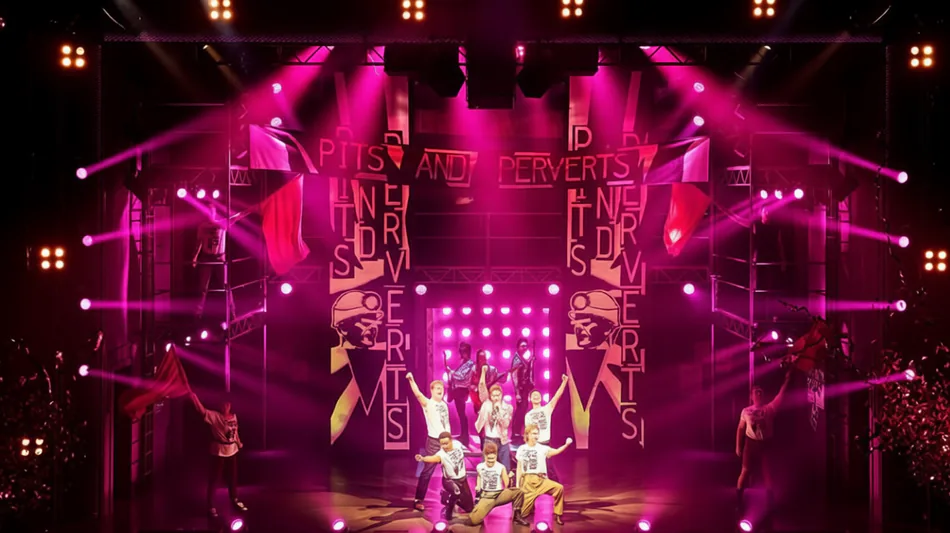
The story does not shy away from the difficulties of the campaign. The narrative depicts LGSM members facing homophobic abuse while attempting to sell raffle tickets for Fray Bentos pies in mining villages. In response to hostile headlines in right-wing tabloids, Ashton organized the 'Pits and Perverts Party,' a fundraising event named after one of the derogatory headlines. This gathering successfully raised thousands of pounds.
The Bridge Theatre’s foyer was designed to resemble a protest headquarters, with walls covered in banners and newspaper headlines to immerse the audience in the atmosphere of resistance. Inside, the band performed with energetic guitar work, while the cast delivered powerful vocal performances.
The production serves as both a historical record and a tribute. Older audience members familiar with the outcome of the strike over 40 years ago watched alongside younger viewers seeking to understand the origins of their current rights. The musical clarifies who was responsible for opening doors for future generations, delivering its most poignant moments at the conclusion when actors describe how their characters’ lives unfolded after the events of the play.
The review notes that the production’s success is the result of collective effort, making it difficult to single out individual contributors for praise. The show runs at the Bridge Theatre, with booking details available on the venue's official website.
D.Findlay--EWJ