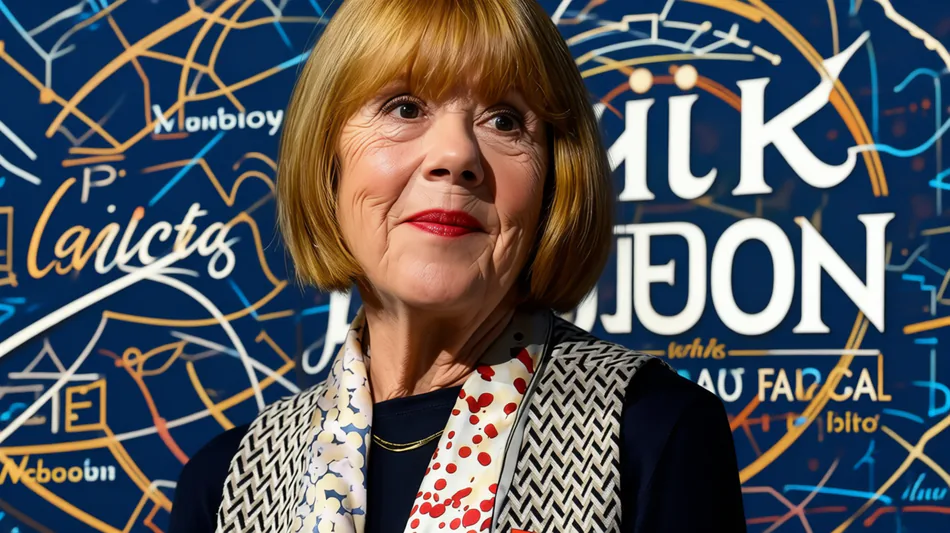
Gisèle Pelicot Finds New Love and Purpose in 'And the Joy of Living'
Gisèle Pelicot, the French woman whose public trial against her ex-husband became a global symbol for survivors of sexual violence, has released a new memoir detailing her journey toward happiness. In 'Et la joie de vivre', published on February 17, 2026, she discusses her new relationship and her enduring impact on accountability movements worldwide.
Gisèle Pelicot, the French woman whose public prosecution of her ex-husband Dominique Pelicot ignited a global reckoning on sexual violence, has published a new memoir detailing her transition from trauma to personal fulfillment. Released on February 17, 2026, the book 'Et la joie de vivre' (And the Joy of Living) was co-written with journalist and author Judith Perrignon.
In the work, Pelicot reflects on her life following the high-profile trial in Mazan, which she deliberately opened to the public to challenge the secrecy surrounding sexual assault cases. The decision to reject a closed hearing was intended to ensure that victims would no longer feel guilty or suffer a double punishment for their trauma.
Beyond recounting her legal battle, Pelicot discusses her personal life and a new romantic relationship. During an appearance on France Inter’s morning program prior to the book’s release, she spoke openly about meeting Jean-Loup, a man she encountered on the island of Ré in 2024 while awaiting the trial.
Pelicot described the encounter as unexpected for both parties. She noted that they bonded over shared personal hardships, which allowed them to understand one another deeply. "I am a happy woman, at peace, serene," she told the radio audience. She added with humor that she had met this "young man" of 73 years old, just as she was reaching that age herself.
"Because one must allow oneself to be happy," Pelicot said. "And I was lucky to meet this 'young man' of 73 years, when I least expected it and he did too." She emphasized that their relationship has brought them joy comparable to adolescence, asserting that "nothing is lost, even if we are 73, everything is possible."
Pelicot also addressed her status as a public figure. While often labeled a feminist icon, she prefers the term "éveilleuse" (awakener), a description used by historian Michelle Perrot. She finds this label more accurate to her role in raising awareness.
She recalled recent interactions with women abroad, including during a trip to Brazil, where strangers approached her with tears in their eyes. "That is when we see that the evil I suffered is universal," Pelicot said. "And that this trial has liberated women's speech."
Despite her global recognition, Pelicot rejects the label of hero. She defines herself as an ordinary woman who opposed a closed hearing and serves as a reference point for others. Her memoir aims to demonstrate that happiness can be reclaimed after severe adversity.
The publication of 'Et la joie de vivre' marks a new chapter in her public narrative, shifting focus from the mechanics of accountability to the possibility of personal renewal. Pelicot continues to advocate for victims while embracing her new life with Jean-Loup.
A.Wallace--EWJ