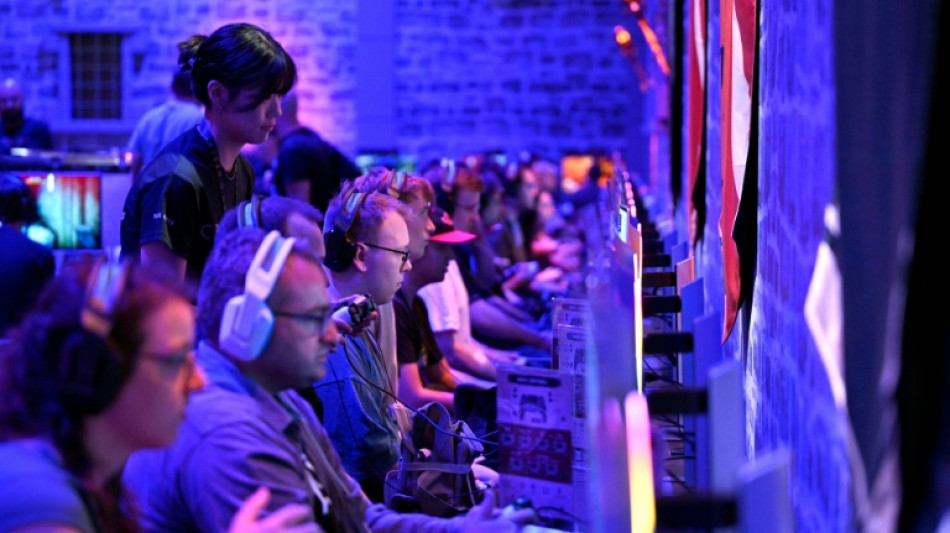
Game over: Players press EU to ban 'destroying' video titles / Photo: Ina FASSBENDER - AFP
It's a bitter pill for video gamers: a growing number of older but still-popular titles are being dropped by publishers -- with servers going dark overnight -- in a practice the EU is being urged to outlaw.
More than a million people from across Europe have backed a citizens' petition called "Stop Destroying Videogames", and are now pressing for action in Brussels.
At the heart of the issue: in the past decade, hundreds of video titles have been rendered unplayable at the whim of their publishers, for a variety of reasons ranging from profitability to changes in strategy.
A significant part of popular culture is being wiped out in the process, with no compensation for gamers who in many cases have invested substantial sums, notably on microtransactions inside the playing environment.
The phenomenon has concerned older versions of hugely popular franchises such as the FIFA football simulation series.
But it was the shutdown of car-racing game The Crew that proved the final straw in 2024, prompting players to mobilise with a European petition.
"It's a bit like buying a book from a publisher and then suddenly opening it to find the pages have gone blank because they've decided you can't play your game anymore," Brendan Fourdan, organiser of the French chapter of the petition, told AFP.
- Lawmakers 'listening' -
Buoyed by the success of the citizens' initiative, gamers' rights campaigners have been lining up meetings to persuade the EU's different institutions to step in.
After meeting in February with the European Commission's digital chief Henna Virkkunen and consumer protection head Michael McGrath, they made their case to members of the European Parliament at a hearing on Thursday.
"MEPs were listening to our demands, and their interventions largely went in our direction, with lawmakers who understood the problem and seemed determined to put an end to what we are denouncing," Fourdan said.
Campaigners are calling for existing consumer protection rules to be enforced when it comes to gaming -- but also for EU legislation to be updated, a far bigger challenge.
"Our movement has no intention whatsoever of preventing publishers from stopping the sale of a game," Fourdan said.
"What we want is simply that when they shut down a game, they leave it in a state where it can still be played," for example on private servers run by volunteers.
Failing that, the idea is to require publishers to systematically refund players.
The issue is far from trivial: video games are Europe's largest cultural industry, generating billions of euros in revenue each year.
"It's an industry with a huge amount of revenue, with a lot of cultural and technological importance," said Moritz Katzner, head of the advocacy group Stop Killing Games.
"It most definitely should be on the radar of the European Commission and the European Parliament."
Green EU lawmaker Catarina Vieira says the issue is resonating among lawmakers.
"The desire is there for all political groups to come to a good solution for those who buy games and deserve to use them for a long term," she told AFP.
The European Commission, which has until the end of July to respond to the petition, has already warned solutions would not be easy to implement, due to intellectual property issues in particular.
Gaming companies, for their part, have rejected the solutions proposed by campaigners.
"Private servers are not always a viable alternative option for players," industry group Video Games Europe said in a statement.
It argues that without the protections publishers put in place to secure players' data, remove illegal content, and combat unsafe community content, such a system would "leave rights holders liable" for abuses.
L.Paterson--EWJ